
Table of Contents
Introduction
Manual business operations are still common in many companies, but they often create hidden costs that affect productivity, efficiency, and business growth.
The reality is that modern businesses operate in an environment where speed, organization, and accuracy matter more than ever. Without structured digital systems, even small inefficiencies can grow into serious operational problems.
In this article, we explore 10 powerful facts about manual business operations that every business owner should know. These insights will help you understand why businesses around the world are moving toward structured digital systems to improve efficiency and scalability.
Many small and growing companies still rely on manual business operations to manage daily activities such as lead tracking, appointment scheduling, and billing. While manual business operations may seem manageable initially, they quickly become inefficient as the business grows.
According to research on workplace productivity by McKinsey, businesses that adopt automation tools can significantly improve efficiency and operational performance.
Businesses that continue using manual business operations often struggle with errors, slow workflows, and poor data visibility.
Fact 1: Employees Spend Up to 30% of Their Time on Repetitive Tasks

Research across multiple industries shows that employees often spend a significant portion of their working hours performing repetitive administrative tasks.
These tasks include:
- Entering data manually
- Managing spreadsheets
- Searching for information
- Sending repeated follow-up messages
While each task may seem small, together they consume valuable working hours that could otherwise be spent on strategic activities such as sales, customer relationships, or innovation.
Automating repetitive processes can dramatically increase productivity and allow teams to focus on meaningful work.
Fact 2: Manual Processes Increase the Risk of Human Error

Human errors are unavoidable when processes depend heavily on manual input.
Common examples include:
- Incorrect data entry
- Miscalculated invoices
- Missed follow-ups with potential clients
- Scheduling conflicts
Even small mistakes can create frustration for both employees and customers.
Digital systems reduce this risk by standardizing processes and automating calculations, notifications, and record-keeping.
Fact 3: Poor Lead Tracking Is One of the Biggest Causes of Lost Revenue
Many businesses believe they need more leads. In reality, the problem is often that existing leads are not tracked properly.
Leads typically come from multiple sources such as:
- Website inquiries
- Social media messages
- Email requests
- Referrals
Without a structured system to capture and track these leads, businesses may forget to follow up or lose track of conversations.
A centralized system for managing leads ensures that every opportunity is recorded and followed up consistently.
Fact 4: Businesses Lose Customers Due to Slow Response Times
Customer expectations have changed significantly in recent years.
Today’s customers expect quick responses and efficient communication. When businesses rely on manual processes to track inquiries or appointments, response times can slow down considerably.
Delayed responses often lead to lost customers, especially when competitors provide faster service.
Digital systems help businesses respond quickly by organizing customer information and automating notifications.
Fact 5: Lack of Organization Creates Operational Stress
Manual workflows often lead to disorganized information scattered across different tools and communication channels.
This creates several challenges:
- Employees struggle to locate information
- Managers cannot easily track progress
- Tasks may be forgotten or delayed
A structured system brings all information into one place, making it easier to manage operations and maintain clarity.
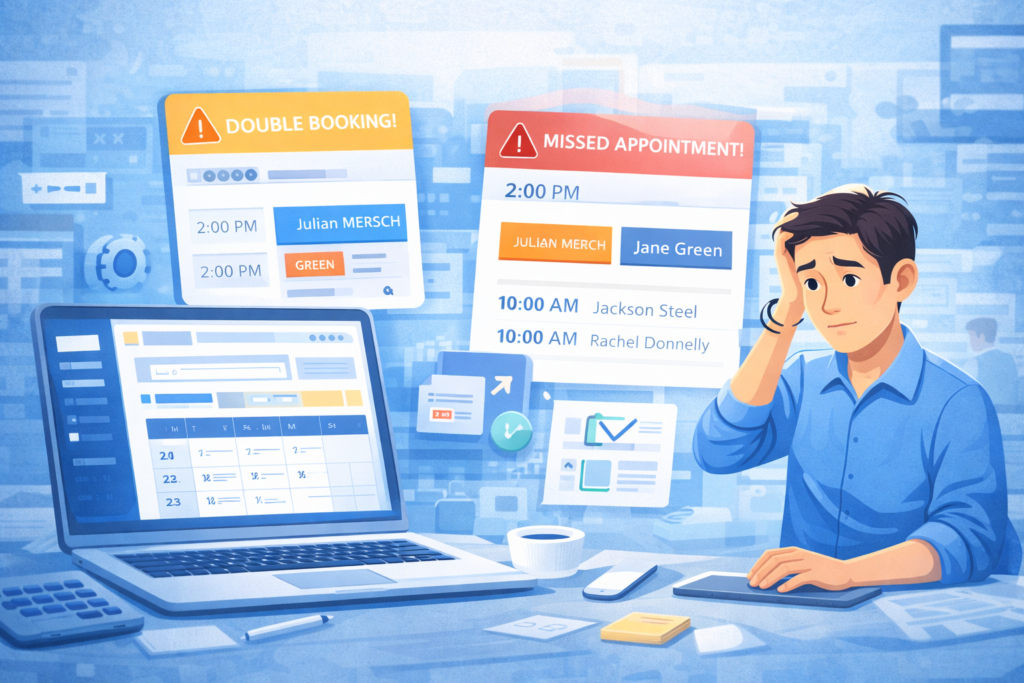
Fact 6: Manual Scheduling Causes Confusion and Conflicts
Scheduling appointments manually can quickly become complicated as the number of customers increases.
Common problems include:
- Double bookings
- Missed appointments
- Difficulty tracking availability
Online booking systems allow customers to schedule appointments directly while automatically updating calendars and sending reminders.
This not only reduces errors but also improves customer convenience.
Fact 7: Manual Billing Can Delay Payments
Creating invoices manually is time-consuming and increases the chance of errors.
Businesses that rely on manual billing often experience:
- Delayed invoices
- Incorrect calculations
- Difficulty tracking payment status
Automated billing systems generate professional invoices instantly and allow businesses to monitor payments efficiently.
Fact 8: Data Scattered Across Tools Makes Decision-Making Difficult
When business data is spread across spreadsheets, emails, and multiple tools, managers lack a clear overview of operations.
This makes it difficult to answer important questions such as:
- How many leads were generated this month?
- Which services generate the most revenue?
- Which customers require follow-ups?
Centralized dashboards provide clear insights that help businesses make informed decisions.
Fact 9: Businesses Without Systems Struggle to Scale
Growth introduces complexity. As businesses gain more customers, manual processes become increasingly difficult to manage.
Without proper systems:
- Teams struggle to coordinate work
- Errors increase
- Customer experience suffers
Businesses that implement structured systems early are better prepared to handle growth smoothly.
Fact 10: System-Driven Businesses Operate More Efficiently
Companies that rely on structured digital systems benefit from several advantages:
- Faster operations
- Improved customer experience
- Better team collaboration
- Clear performance insights
These benefits allow businesses to operate more efficiently and remain competitive in modern markets.
Automating scheduling with an Appointment Booking System helps businesses eliminate manual scheduling conflicts.
Quick Self-Assessment: How Organized Is Your Business?
Ask yourself the following questions:
- Can you track every lead your business receives?
- Do you have a clear system for managing customer information?
- Are appointments and schedules organized automatically?
- Can you generate invoices quickly and track payments easily?
- Do you have real-time insights into your business performance?
If the answer to several of these questions is no, it may be time to evaluate your current processes and consider adopting more structured systems.
Why Businesses Are Moving Toward Digital Systems
Businesses worldwide are adopting digital systems to simplify operations and improve efficiency.
These systems help automate repetitive tasks, organize information, and provide clear insights into business performance.
Instead of relying on scattered tools and manual processes, businesses can manage everything from a centralized platform that supports growth and long-term stability.
Replacing manual business operations with structured digital systems allows businesses to improve efficiency, reduce mistakes, and scale operations more smoothly.
Manual processes often create bottlenecks as businesses grow. When teams rely on spreadsheets, emails, and disconnected tools, important information becomes difficult to track. This leads to missed opportunities, delayed responses, and inefficient workflows. Digital systems provide structured workflows that help businesses manage data, automate repetitive tasks, and maintain accurate records.
Businesses looking to manage leads more efficiently often use a CRM & Lead Management System.
Final Thoughts
The hidden cost of manual operations is often underestimated. While traditional methods may seem convenient at first, they can gradually create inefficiencies that limit business growth.
Understanding these challenges is the first step toward building a more organized and scalable business environment.
Businesses that invest in structured systems today position themselves for greater efficiency, better customer experiences, and stronger long-term growth.